
Conservation stonework
Repairs that keep as much of the original stone as possible, carried out to the specification agreed with your architect and the planning authority.
Conservation stonework
We repair and consolidate stonework on castles, churches, bridges and country houses, using lime mortar and stone matched to the original. Based in East Linton, East Lothian, and working throughout Scotland.
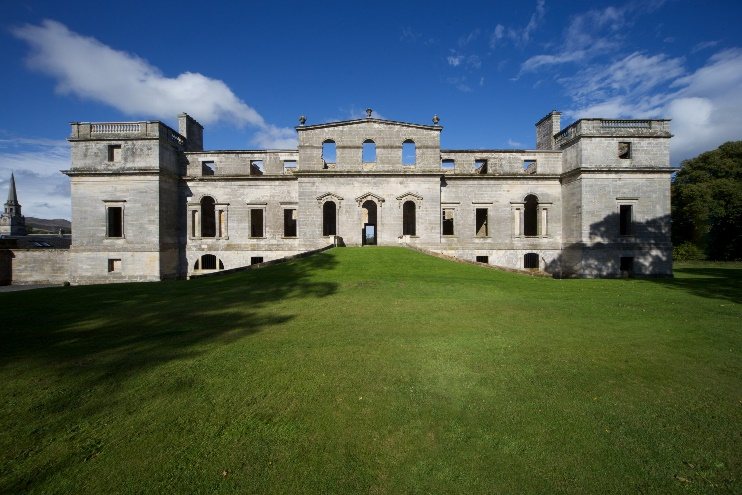
Presented by the Scottish Castles Association to Graeme Brown in 2007 for the restoration of Stoneypath Tower.
Caisteal Bharraich in Tongue was one of nine projects given an award or commendation in the AABC Conservation Awards.
Dunbar Battery won the listed building category for projects under £5 million.
The restoration of Penicuik House was shortlisted by the Royal Incorporation of Architects in Scotland.
Most of our work is on listed buildings and scheduled monuments, where repairs have to be carefully specified and recorded.
We work with conservation architects, structural engineers and archaeologists from the first site visit, and we have worked for many years with the Scottish Lime Centre on the traditional skills these buildings need. If you own a historic or listed stone building, we can advise on any problems as they arise.
About G. Brown StonemasonEvery job starts from the same principle: repair what is there, match what is missing, and use the materials the building was made with.
Repairs that keep as much of the original stone as possible, carried out to the specification agreed with your architect and the planning authority.
Conservation stoneworkMaking ruins and unstable structures safe: capping wall heads, rebedding loose masonry and tying facing stone back to the core.
Historic building consolidation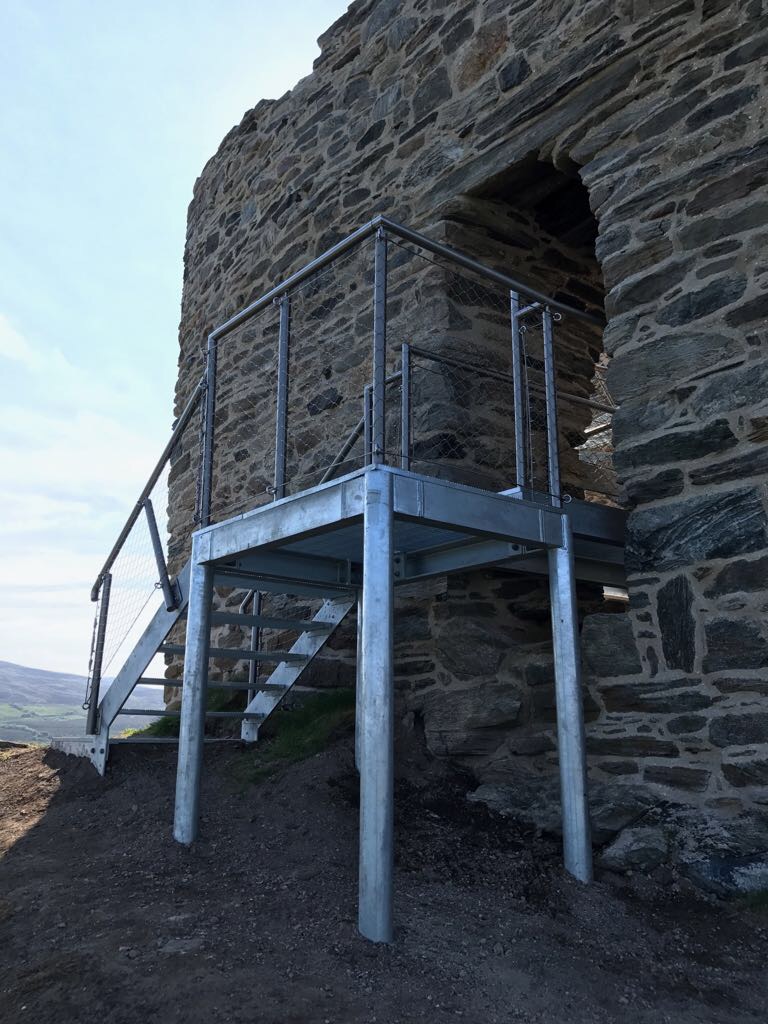
Indenting new stone, repointing in lime mortar, and repairs to chimney stacks, copes and boundary walls.
Stone repairs and lime pointing
Traditional lime harl, render and lime paint that let solid stone walls dry out, applied by hand and matched to the building.
Lime harling, render and painting
Repairs to Category A, B and C listed buildings and scheduled monuments, specified with your architect and carried out with the right consents in place.
Listed building repairs

Much of our work is close to home in East Lothian, Edinburgh and Midlothian, Fife and the Borders. Other projects have meant working from a floating pontoon, through a Grampian winter, or with a helicopter.
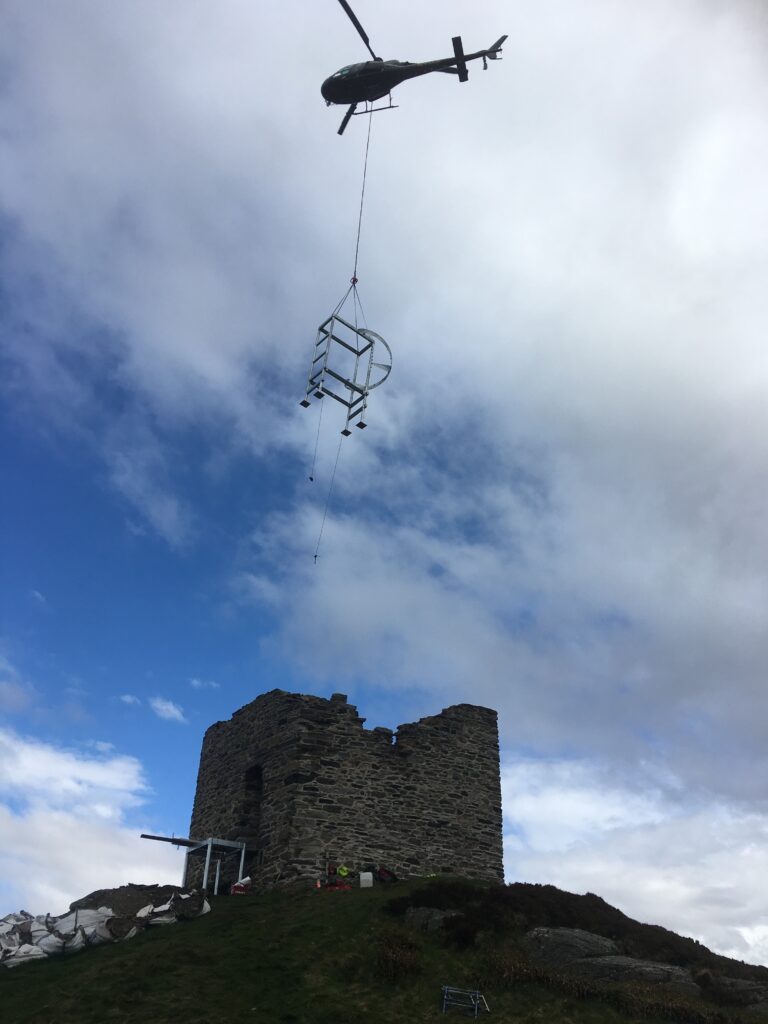
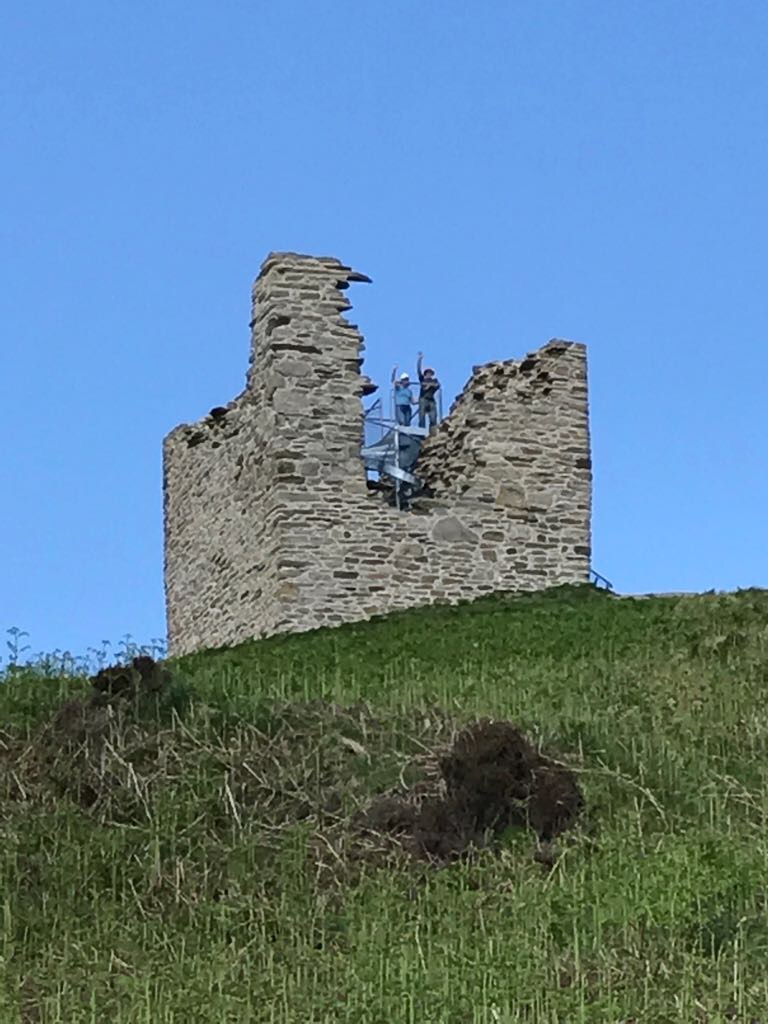
An isolated ruined castle in Sutherland, made safe and opened to visitors.
We capped the wall heads, repointed the masonry in full and tied loose facing stone back to the core with stainless steel ties. A stainless steel staircase and viewing platform were then flown in by helicopter and installed.
Like-for-like repairs in matching materials often do not need consent, but work that changes the character of a listed building does, and almost any work on a scheduled monument needs consent from Historic Environment Scotland. Check with your local planning authority first. We regularly work with architects on applications.
Traditional walls were built with lime, which is softer and more breathable than the stone. Moisture escapes through the joints. Cement mortar traps water in the stone, which speeds up decay and frost damage.
Yes. We are based in East Linton and work across Scotland, from Edinburgh, Fife and the Borders to Perthshire, the Highlands and the Western Isles.
Yes. We regularly work to specifications from conservation architects and engineers, and our work at Stoneypath Tower and Invergarry Castle was monitored by Historic Scotland, now Historic Environment Scotland.

Send a short description and a few photos. We will call you back to talk it through and, if it helps, arrange a site visit.